









In the landscape of herbal supplements, few ingredients carry the widespread recognition and studied history of hawthorn. With deep roots in both European folk medicine and Traditional Chinese Medicine (where it’s known as Shan Zha), hawthorn berry, leaf, and flower extracts have long been associated with cardiovascular support. Today, this historical reputation is backed by modern research into its bioactive compounds, fueling a steady global demand. Meeting this demand, in bulk and at scale, is a core function of numerous extract suppliers in China. Their role is not to redefine the ingredient, but to reliably deliver its standardized, concentrated value to manufacturers worldwide.
The story of this supply begins with cultivation. China is one of the world's largest producers of hawthorn (Crataegus pinnatifida), with vast orchards in northern provinces like Shandong, Hebei, and Liaoning. This agricultural scale is the foundational advantage. Suppliers operate within a mature ecosystem, from growers who specialize in high-yield, high-polyphenol varieties to processors who clean and dry the crimson berries. This established pipeline ensures a consistent, year-round flow of raw material, free from the variability and scarcity that can plague wild-harvested botanicals. It transforms hawthorn from a seasonal forage into a stable commodity.
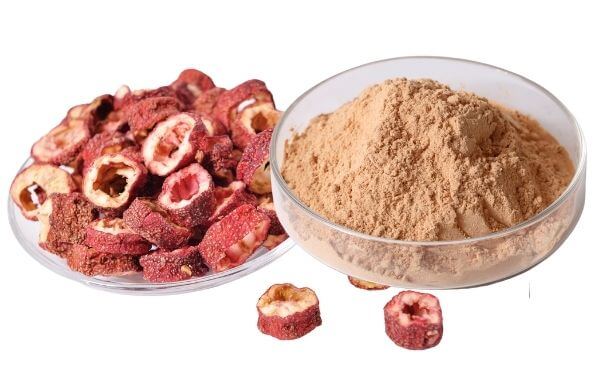
The raw berry, however, is only the starting point. The leap from dried fruit to functional ingredient happens in the extraction facility. Hawthorn’s purported benefits are linked to a complex profile of compounds: oligomeric procyanidins (OPCs) for vascular integrity, flavonoids like vitexin and hyperoside, and triterpenoid acids like ursolic and oleanolic acid. Simple powdered berry cannot guarantee a potent or consistent dose of these actives. Industrial extraction, typically using water or ethanol, concentrates these key components. The resulting liquid is purified and spray-dried into a fine, reddish-brown powder. This is the workhorse of the industry: a standardized extract, often quantified by its total flavonoid content (e.g., 10% or 20%) or OPC content, which provides formulators with a known, measurable quantity of active constituents.
For a buyer, the procurement process hinges on navigating this standardization. The market offers a spectrum, from simple powdered berry to highly purified extracts. The conversation with a supplier must therefore be specific. What part of the plant is used? A berry extract differs in profile from a leaf-and-flower extract. What is the marker of standardization? Reputable suppliers provide a detailed Certificate of Analysis (CoA) that confirms the active content via High-Performance Liquid Chromatography (HPLC). Crucially, this CoA must also verify safety, listing tested levels of heavy metals, pesticides, aflatoxins, and microbial contamination. Independent lab verification of these specs is a standard and essential step for any serious manufacturer, ensuring the ingredient is both potent and pure enough for human consumption.
The price of hawthorn extract is directly tied to these specifications. A non-standardized powder is a cost-effective option for blends where hawthorn is a minor component. A 20% flavonoid extract commands a higher price, reflecting the greater quantity of raw berries and more intensive processing required to achieve that concentration. Suppliers range from large, vertically integrated companies controlling the process from orchard to export, to smaller trading houses. The former generally offer greater traceability and batch-to-batch consistency—critical factors for brands where product uniformity is paramount.
An interesting aspect of China's hawthorn industry is its connection to the domestic food market. Shan Zha is wildly popular in China as a sweet snack (tanghulu), in candies, and as a digestive aid. This massive internal consumption supports the agricultural infrastructure and drives food-grade processing. For extract suppliers, this often means they operate dual-stream facilities, producing both food-grade products and higher-potency, GMP-compliant extracts for the nutraceutical market. This deep familiarity with the plant, from its culinary to its clinical applications, informs their technical expertise.
Ultimately, sourcing wholesale hawthorn extract from China is a study in reliable, industrialized botany. It connects ancient orchards to contemporary capsules in a seamless, if unglamorous, supply chain. The value for global brands lies in this very reliability: access to a historically revered and scientifically examined ingredient, delivered not as a mysterious powder but as a analyzed, consistent, and scalable material. The supplier’s role is to be the dependable link, ensuring that the modern promise of hawthorn is grounded in the concrete realities of agricultural yield, chemical analysis, and bulk logistics. In the world of heart-health supplements, that kind of steadiness is precisely what the market demands.
Comments (0)