









In modern manufacturing, adhesive dispensing is no longer just a simple material application step. Electronics, automotive components, optical assemblies, and industrial products often require adhesives to be delivered in precise quantities and placed in specific locations. Inconsistent dispensing can lead to uneven bonding, material overflow, assembly defects, or reduced product reliability.
Automated dispensing equipment helps manufacturers improve application consistency, but the performance of the dispensing needle should not be overlooked. As the final component through which adhesive is delivered, the needle directly affects the material flow path and application process.
A One-piece Double-threaded Precision Needle is designed to provide an integrated needle structure and a threaded connection for industrial dispensing applications. Its design can help support stable installation and repeatable adhesive delivery, particularly in automated production environments.
Why the Dispensing Needle Matters in Automated Production
As manufacturing processes become more automated, the requirements for adhesive application are becoming increasingly demanding. Small components, narrow bonding areas, and high-speed production lines leave less room for dispensing errors.
Manual application can be affected by differences in operator technique, dispensing pressure, and adhesive viscosity. Automated systems reduce many of these variations, but consistent results still depend on the compatibility and precision of individual dispensing components.
Several needle characteristics can influence dispensing performance:
-
Inner diameter: Affects the available flow passage and adhesive delivery.
-
Tip geometry: Influences the placement and shape of the deposited material.
-
Surface condition: Can affect residue accumulation and cleaning.
-
Thread design: Determines how the needle connects with compatible equipment.
-
Dimensional accuracy: Helps maintain a consistent fluid path and installation position.
When these factors are not properly matched to the adhesive and equipment, manufacturers may experience unstable flow, inconsistent bead sizes, or positioning problems.
Understanding the One-piece Double-threaded Precision Needle
Traditional dispensing assemblies may contain multiple separate components, such as adapters, needle holders, and dispensing tips. Each connection introduces an additional interface that needs to maintain proper alignment and sealing.
The one-piece design combines the needle structure into an integrated component, reducing the need for certain separate connections. Its double-threaded configuration provides threaded connection points for compatible dispensing equipment.
This structure is particularly relevant in automated applications where dispensing components operate repeatedly under mechanical movement and pressure. A properly matched threaded connection helps maintain installation stability and reduces the number of separate interfaces within the assembly.
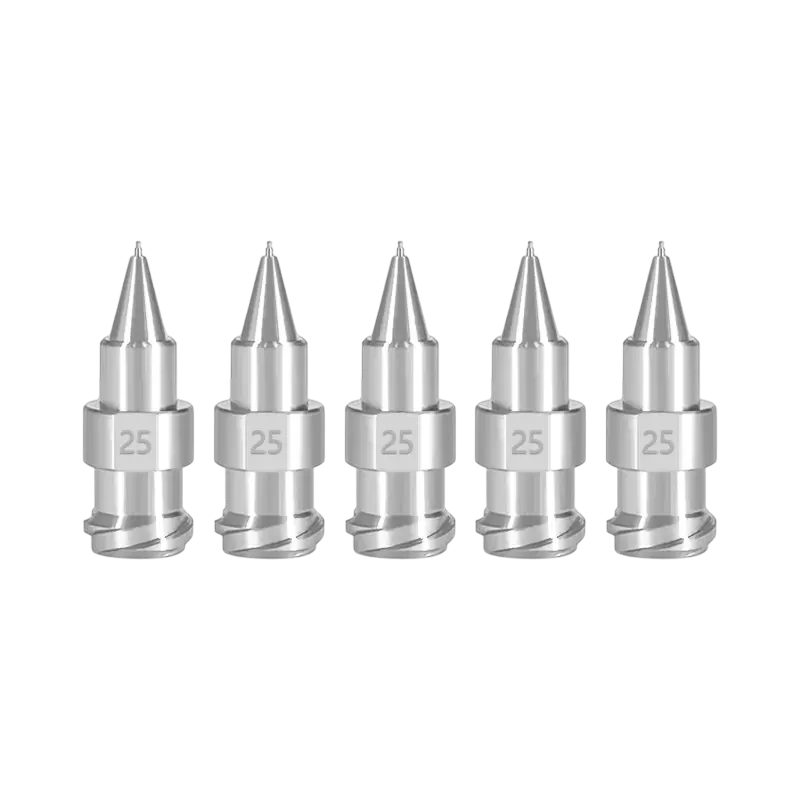
Contriu offers a One-piece Double-Thread Precision Needle, described as a Musashi-style precision stainless steel needle with a one-piece, double-threaded structure for industrial dispensing applications.
<image-placeholder>Product image: https://www.contriu.com/uploads/upload/20260920/260920145505941.webp</image-placeholder>
Stainless Steel Construction and Manufacturing Accuracy
The material and machining quality of a dispensing needle both influence its suitability for industrial use.
Different adhesives have different viscosities and chemical characteristics. Some formulations may also contain fillers, solvents, or reactive components. The needle must therefore maintain its structural integrity and dimensional accuracy during repeated dispensing operations.
Stainless steel is widely used in precision dispensing needles because of its mechanical strength, corrosion resistance, and dimensional stability. These characteristics make it suitable for a range of industrial dispensing environments.
However, material selection is only one part of the manufacturing process. The internal passage must be accurately formed to support consistent material flow, while the threaded sections need to match the corresponding equipment connections.
Surface quality also deserves attention. Rough or damaged internal surfaces may allow adhesive residue to accumulate, potentially affecting cleaning and subsequent dispensing operations.
For this reason, buyers should evaluate both the stainless steel material and the precision machining quality when sourcing dispensing needles.
How Needle Design Influences Adhesive Application
Dispensing problems are not always caused by the adhesive or the main dispensing machine. In some cases, the needle or its connection interface may contribute to inconsistent application.
For example, an incorrectly aligned needle can cause the adhesive to deviate from its intended position. An unsuitable internal diameter may affect flow resistance, while an unstable connection can create movement or leakage during operation.
These issues are particularly important when applying small quantities of adhesive, where even minor variations can affect the finished assembly.
A suitable precision dispensing needle should therefore work as part of a coordinated dispensing system. Its dimensions, thread specification, and internal structure need to match the adhesive characteristics and equipment requirements.
The goal is to maintain a predictable flow path and support consistent adhesive placement throughout repeated production cycles.
Industrial Applications of Precision Dispensing Needles
Precision dispensing components are used across industries where controlled adhesive application is essential.
Electronics Manufacturing
Adhesives are commonly applied for component fixation, sealing, insulation, and protection. Excess material may contaminate nearby components, while insufficient application can affect bonding reliability. A suitable dispensing needle helps manufacturers control the application position and material quantity.
Automotive Electronics
Vehicles contain numerous sensors, control units, and electronic assemblies that require bonding and sealing. Automated dispensing processes must maintain repeatable application across large production volumes, making needle compatibility and connection stability important considerations.
Optical Equipment
Optical assemblies often have limited bonding areas and sensitive component surfaces. Excess adhesive may interfere with optical elements or affect assembly positioning. Controlled dispensing is therefore important when applying adhesives to small or precisely defined areas.
General Industrial Assembly
Manufacturers use adhesives to join metal, plastic, glass, and composite materials. Since adhesive viscosity and production requirements vary between applications, the dispensing needle must be selected according to the specific material and process conditions.
Key Factors When Selecting a Precision Dispensing Needle
Choosing a One-piece Double-threaded Precision Needle requires more than checking its appearance or connection type. Buyers should evaluate how the component will perform within the complete dispensing process.
Important selection considerations include:
-
Adhesive characteristics: Consider viscosity, formulation, and chemical compatibility.
-
Dispensing requirements: Determine the required material volume, dot size, and bead shape.
-
Needle dimensions: Check the inner and outer diameters against the application requirements.
-
Thread specifications: Confirm compatibility with the dispensing equipment and related fittings.
-
Operating conditions: Review dispensing pressure, speed, and working environment.
-
Material suitability: Consider corrosion resistance and compatibility with the adhesive.
-
Maintenance requirements: Evaluate cleaning methods and replacement frequency.
-
Batch consistency: Check whether the supplier can maintain consistent dimensions and manufacturing quality across production batches.
For high-volume manufacturing, batch-to-batch consistency is particularly important. A needle that performs well during initial testing may still cause production difficulties if dimensions or connection quality vary between deliveries.
Why Integrated Needle Designs Matter for Production Stability
The benefit of an integrated dispensing needle lies in its functional design rather than appearance alone. By combining the needle structure into one component, the design can reduce certain assembly interfaces and provide a more direct connection within the dispensing system.
For automated production lines, where components operate through repeated dispensing cycles, stable installation and consistent fluid passage are important. These factors can contribute to more predictable adhesive application when the needle is correctly matched to the equipment and material.
Contriu focuses on industrial dispensing components, including metal glue needles, plastic glue needles, dispensing fittings, syringe cylinders, and static mixers. These products serve different parts of the adhesive application process.
Considering the needle together with the barrel, fittings, adhesive, and dispensing equipment helps manufacturers evaluate the complete system rather than treating each component as an isolated purchase.
Conclusion
As manufacturers continue to adopt automated adhesive application, dispensing components play an increasingly important role in process consistency. A One-piece Double-threaded Precision Needle combines an integrated structure with threaded connections to support stable installation and controlled adhesive delivery.
Stainless steel construction, accurate machining, appropriate needle dimensions, and equipment compatibility should all be considered when selecting a precision dispensing needle.
For electronics, automotive electronics, optical equipment, and general industrial assembly, choosing the right needle as part of the complete dispensing system can help manufacturers maintain more consistent application results. Contriu provides a range of industrial dispensing components to support different adhesive application requirements.
Comments (0)