









Rainy weather can make everyday plans more difficult, especially when you need to commute, walk through the city, cycle to work, or spend time outdoors. The right outer layer can make these situations much more comfortable by keeping rain away while allowing you to move naturally.
A rain jacket should not be chosen based on appearance alone. Water protection, breathability, fit, construction, and practical details all affect how well it performs. The best option is one that matches your routine and the weather conditions you regularly experience.
What Makes a Good Rain Jacket?
A reliable rain jacket starts with effective protection against moisture. However, the fabric is only one part of the overall design. Seams, zippers, pockets, cuffs, and the hood can all influence how much protection you receive.
For regular outdoor use, look for carefully constructed seams and closures that reduce opportunities for water to enter. A well-designed outer layer should also remain comfortable when worn for several hours.
The ideal choice depends on your activities. Someone who mainly walks around town may have different priorities from someone who cycles every day.
Why Does Waterproofing Matter?
Rain protection is particularly important when you spend extended periods outdoors. A water-resistant surface may be sufficient for light showers, but heavier or prolonged rainfall generally requires more reliable protection.
When comparing jackets, consider the fabric's waterproof specifications and how the garment has been assembled. Sealed seams and protected zippers can provide additional coverage.
Remember that no outer layer can compensate completely for unsuitable clothing underneath. Combining the jacket with appropriate trousers, footwear, and layers creates better overall protection.
Is Breathability Just as Important?
A jacket that keeps rain outside but traps all the moisture inside can become uncomfortable.
Walking, cycling, and other activities generate body heat and perspiration. Breathable technical materials are designed to allow water vapour to escape while continuing to resist external moisture.
This balance is especially useful for commuters. You may begin your journey in cool rain, become warmer while moving, and then arrive at a heated indoor environment. Breathable clothing can make these temperature changes easier to manage.
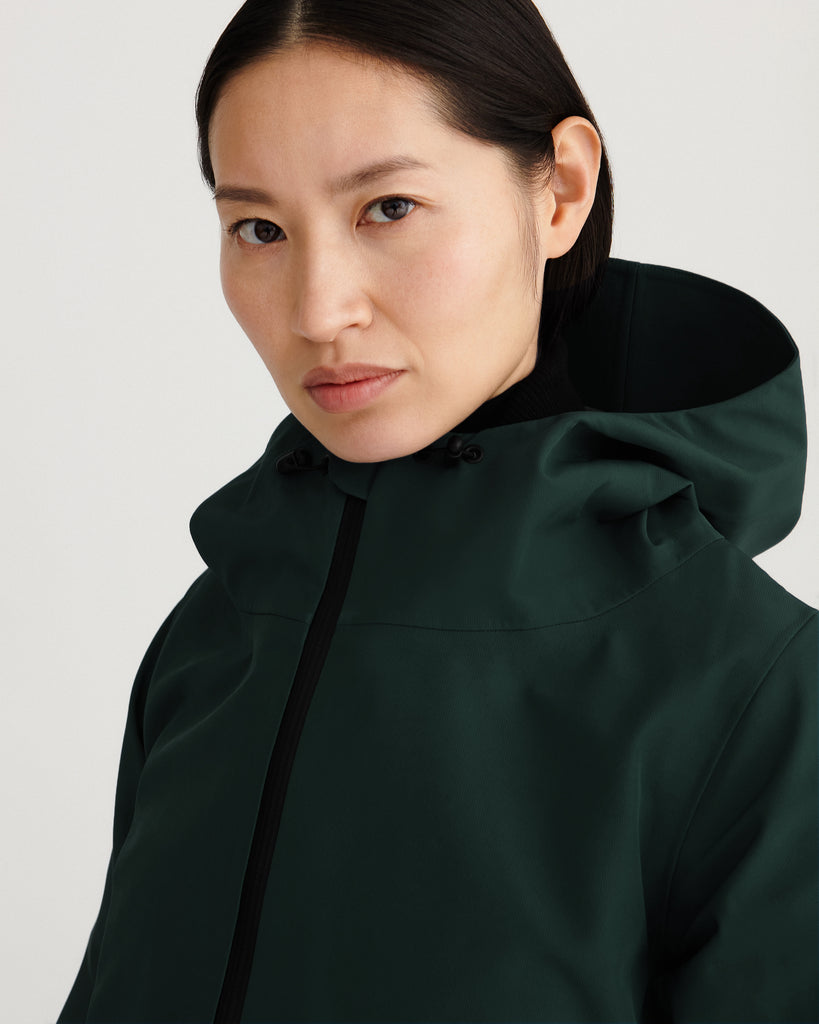
How Should the Fit Feel?
Fit affects both comfort and functionality. A jacket should provide enough room to wear a sweater or light mid-layer underneath without feeling restrictive.
The shoulders and arms should allow natural movement. This is particularly important for cyclists who need unrestricted movement while steering.
An excessively oversized jacket can also create problems. Loose fabric may flap in strong wind and make movement less comfortable. A practical fit should provide a balance between layering and mobility.
Does Jacket Length Make a Difference?
Length affects coverage and movement.
Shorter styles can be convenient for cycling and active use because they offer greater freedom around the legs. Mid-length designs provide a useful balance between protection and mobility.
Longer coats can cover more of the hips and upper legs, which can be helpful during walking or prolonged exposure to rain. If you cycle regularly, however, check that the hem is designed to work comfortably in a seated position.
Which Features Are Useful for Daily Wear?
Small design elements can have a surprisingly large impact on everyday comfort.
Consider features such as:
- Adjustable cuffs
- Secure pockets
- Protected zippers
- Adjustable hoods
- Comfortable collars
- Lightweight construction
- Ventilation features
- Adjustable hems
For cyclists, a secure hood and unrestricted sleeves can be particularly useful. For walkers, additional coverage and practical pockets may be more important.
Can Rainwear Be Stylish?
Functional outerwear does not need to look like specialist sports equipment. Contemporary designs can combine technical fabrics with clean silhouettes and understated colours.
A versatile jacket can work with jeans and trainers during casual days or be worn over smarter clothing for commuting to work.
Choosing a timeless design can also make the garment easier to wear across several seasons.
What About Sustainable Materials?
Material choice is increasingly important when purchasing outerwear. Recycled fibres can be used as an alternative to virgin materials, while durable construction can help reduce the need for frequent replacement.
Sustainability also involves how long a garment remains useful. A quality jacket that is properly cared for and repaired when necessary may have a longer practical life.
When comparing options, consider the complete product rather than focusing on one sustainability claim.
How Can You Maintain Your Jacket?
Following the care instructions is one of the easiest ways to protect your investment. Always check the manufacturer's label before washing.
Use suitable detergents and avoid fabric softener if it is not recommended for the material. Allow the jacket to dry properly after wet-weather use before storing it.
It is also worth checking seams, cuffs, zippers, and pockets from time to time. Small problems can often be addressed before they affect the garment more seriously.
Choosing a Jacket for Your Lifestyle
There is no single jacket that works perfectly for everyone. Think about how you spend your time outdoors and the conditions you normally encounter.
For cycling, prioritise mobility and a suitable hood. For walking, consider coverage and comfort. For travelling, lightweight construction and packability may be more valuable.
BYBROWN combines contemporary urban styling with technical rainwear features, creating outerwear suited to everyday movement in changing weather.
Conclusion
Choosing the right rain jacket means considering the complete design rather than focusing on waterproofing alone. Breathability, fit, length, construction, practical details, and durability all contribute to comfort. By matching these features to your daily routine, you can choose outerwear that works naturally for commuting, cycling, walking, and everyday city life.
Frequently Asked Questions
1. How can I tell if a jacket is suitable for heavy rain?
Check its waterproof specifications, seam construction, zipper protection, and overall design. These features together indicate how well it is intended to handle prolonged rainfall.
2. Is a breathable jacket useful when cycling?
Yes. Cycling increases body heat and perspiration, so breathable materials can help release moisture and improve comfort during your journey.
3. What should I wear underneath a rain jacket?
Choose layers according to the temperature. A lightweight base layer works for mild conditions, while a sweater or insulating layer can be added when it gets colder.
4. Can I wear a rain jacket throughout different seasons?
Yes. A versatile model can work across spring, autumn, and mild winter conditions when combined with suitable layers.
5. How often should I wash my rain jacket?
Wash it according to the manufacturer's care instructions rather than following a fixed schedule. Cleaning too frequently or using unsuitable products may affect technical finishes.
Comments (0)