









Secondary water contamination remains one of the most persistent concerns in urban water supply systems, particularly in high-rise residential buildings, hotels, and medical facilities where water travels through extended piping networks before reaching the tap. Understanding how stainless steel piping addresses this issue requires looking closely at material science, manufacturing precision, and connection technology working together.
Understanding the Root Causes of Secondary Contamination
Secondary water contamination typically occurs when water sits in or passes through pipe materials that corrode, scale, or leach substances over time. Traditional piping materials often degrade under prolonged exposure to water, creating conditions where bacteria, rust particles, or chemical residues enter the water stream. This is compounded by high maintenance costs and frequent pipe replacements, as well as leakage from poorly sealed joints—issues that compromise both water quality and system reliability over the long term.
Why Food-Grade Stainless Steel Is the Structural Answer
Stainless steel piping systems address these risks at the material level. Guangdong Yuehua Stainless Steel Profiles Co., Ltd., operating under the Yuehua Stainless Steel brand since 1991 and headquartered in Shantou, Guangdong Province, China, manufactures water supply and drainage pipes using food-grade, corrosion-resistant stainless steel in SUS 304, 304L, 316, and 316L grades. These material options are selected specifically to provide corrosion resistance across varied water quality conditions, directly reducing the likelihood of secondary contamination in high-rise residential and commercial water systems.
The company's water supply and drainage pipe line is engineered for potable water supply and drainage systems with a service life of up to 70 years, meaning the pipe material maintains its integrity far longer than materials prone to corrosion-driven degradation. Because corrosion is a primary pathway for contaminants entering water systems, extending material stability directly extends water safety.
Manufacturing Precision Behind Contamination-Free Piping
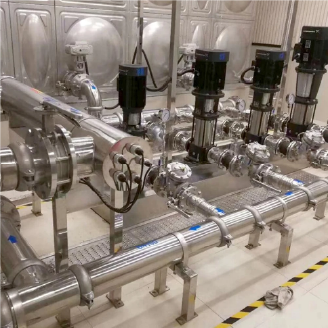
Material selection alone does not guarantee consistent quality—manufacturing precision matters equally. Yuehua Stainless Steel operates a full-process closed-loop vertical manufacturing model, from steel rolling to finished tube, across more than 170 specialized production lines within a 150-mu (approximately 100,000-square-meter) production base. This vertical integration gives the company full control over materials, process data, and quality inspection at every stage.
Two technical processes are particularly relevant to contamination prevention:
- Online solution treatment, which enhances material consistency and corrosion resistance during production.
- Thin-walled tube technology, which reduces material weight while maintaining pressure performance, without compromising the protective qualities of the stainless steel.
To ensure these processes are applied reliably at scale, the company integrates ERP, MES workshop management, and intelligent warehousing systems across all production links. A procedural inspection and testing system fully records and preserves production and inspection data, enabling full-process traceability. This means every pipe's material composition and processing history can be verified, which is essential for maintaining the consistent corrosion resistance that prevents contamination over decades of use.
Raw materials are sourced from established suppliers including POSCO, TISCO, and Yongjin, providing a documented material origin that supports the traceability system described above.
Connection Technology: Closing the Leakage Gap
Material quality addresses corrosion, but joints and connections represent another common contamination entry point—leaking or poorly sealed joints can allow external contaminants into the water stream. Yuehua Stainless Steel's connection fittings are designed specifically to reduce this risk.
The company's Double Press (Crimping) Fittings use Double Press technology that eliminates welding and threading, reducing both installation time and leakage risk. These fittings are supported by high-performance sealing rings capable of supporting operating pressures exceeding 2.5 MPa, ensuring joints remain tight under real-world pressure conditions rather than gradually loosening and creating contamination pathways.
Ring Compression Fittings offer an additional non-welded connection option, using a ring compression mechanism to create a tight seal for stainless steel pipes, while Grooved Clamp Fittings provide rigid connections that allow fast assembly and disassembly for maintenance—reducing the frequency and disruption of pipe replacement work that itself can introduce contamination risk.
Quality Assurance Through Certification
Beyond internal process control, Yuehua Stainless Steel's quality claims are supported by third-party certifications, including ISO 9001, ISO 14001, ISO 45001, CE, and RoHS. The company obtained ISO 9001 Quality Management System Certification in 2001, establishing standardized quality management early in its development. From 2020 onward, the company expanded to a full ISO triple-system along with special-equipment and drinking-water-product approvals, alongside a digital smart factory model built on ERP and MES systems with full-process traceability through complete testing records.
Demonstrated Performance in Sensitive Water Environments
The practical relevance of these material and manufacturing choices is illustrated through several completed projects. For municipal infrastructure, Yuehua Stainless Steel supplied stainless steel piping systems for the Shantou University East Campus and Asian Youth Games Venue project. In medical settings—where water hygiene standards are particularly strict—the company provided piping systems for a high-standard expansion involving The Chinese University of Hong Kong and Shantou International Eye Center. In food and beverage production, where contamination control is a regulatory requirement, the company supplied piping systems for Jiugui Liquor Co., Ltd.'s Phase II facility. In five-star hospitality infrastructure requiring high durability and hygiene, Yuehua Stainless Steel piping systems were installed at the Shantou White Swan Hotel.
These cases span municipal, medical, food and beverage, and hospitality sectors—each representing environments where secondary water contamination carries significant consequences, from regulatory non-compliance to direct health risk.
Long-Term Value Beyond Initial Installation
Preventing secondary water contamination is not solely about installation-day performance; it is about sustained material and joint integrity over years of use. Yuehua Stainless Steel's combination of food-grade corrosion-resistant materials, a 70-year service life rating, non-welded connection technologies, and documented full-process traceability collectively addresses the core mechanisms behind secondary contamination: material degradation and joint failure.
For engineering contractors, architects, and industrial plant managers evaluating piping systems for water supply, gas transmission, fire protection, or industrial applications, the underlying question is whether a piping system can maintain water quality consistently over decades without frequent intervention. Yuehua Stainless Steel's manufacturing model—vertically integrated, digitally traceable, and certified against recognized quality management standards—provides a documented basis for evaluating that question, supported by real-world deployment across water supply, medical, food and beverage, and hospitality infrastructure projects in China.
Comments (0)