









The fertilizer industry continues to evolve as agricultural producers look for more efficient ways to supply essential nutrients. Among phosphate fertilizers, monoammonium phosphate (MAP) remains an important material because it provides both nitrogen and phosphorus and can be used in a wide range of fertilizer formulations.
For fertilizer manufacturers, however, producing consistent MAP on an industrial scale involves more than simply combining phosphoric acid and ammonia. A well-designed production line needs to manage raw materials, reaction conditions, granulation, drying, screening, dust collection, and product storage as one connected system.
For companies planning a new facility or upgrading an existing one, understanding the main requirements of Industrial-grade Monoammonium Phosphate (MAP) process design can help reduce production problems and improve long-term operating efficiency. Sawei Equipment provides integrated equipment and plant engineering solutions for MAP and other fertilizer production projects.
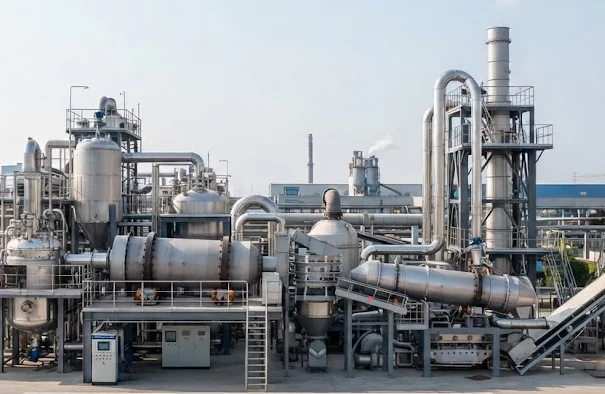
What Makes Industrial MAP Production Challenging?
A commercial MAP plant usually involves several processes working together. If one stage is not properly controlled, it can affect the performance of the entire production line.
One common issue is the reaction between phosphoric acid and ammonia. The process produces heat and must be carefully controlled to obtain the desired product composition. Incorrect feeding rates can result in changes in acidity, product quality, and downstream processing conditions.
The physical properties of the final product are also important. If moisture is too high or granulation is poorly controlled, the finished fertilizer may become difficult to store, transport, or apply.
Environmental control is another major consideration. MAP production can generate dust, ammonia, acidic gases, and other emissions. A modern plant therefore needs an appropriate collection and treatment system rather than relying only on the main production equipment.
A Complete Approach to MAP Production Line Design
A good industrial-grade MAP production line should be designed as a complete system instead of a collection of independent machines.
1. Raw Material Preparation
Phosphoric acid and ammonia need to be supplied at stable rates. Proper storage, transfer, measurement, and control equipment helps maintain a steady production process.
The quality of the raw materials also has a direct effect on the final MAP product. Manufacturers should consider acid concentration, impurities, temperature, and other characteristics during the plant design stage.
2. Reaction and Neutralization
The reaction stage is where the basic phosphate product is formed.
Phosphoric acid is introduced into the reaction system while ammonia is added in a controlled manner. The two materials react and produce an ammonium phosphate slurry.
Consistent feeding is especially important because excessive or insufficient ammonia can change the chemical balance of the product.
For industrial plants, the reaction equipment should also be selected according to the expected capacity, temperature, material characteristics, and corrosion requirements.
3. Granulation
The slurry then moves into the granulation section.
Here, the material is formed into particles that are easier to handle, transport, and use as fertilizer. The objective is to obtain granules with a relatively uniform size and sufficient strength.
Poor granulation can lead to excessive fine particles, oversized lumps, high recycling rates, or weak finished granules.
A properly designed MAP fertilizer granulation system helps maintain a stable balance between material feeding, moisture, particle formation, and recycling.
4. Drying
Freshly formed granules normally contain more moisture than the final product requires.
The drying system removes excess moisture while avoiding unnecessary overheating or damage to the granules. Stable drying conditions are important because excessive moisture can increase the risk of caking during storage.
For large fertilizer plants, the dryer should be matched with the production capacity and upstream granulation system to avoid creating a production bottleneck.
5. Screening and Recycling
After drying, the granules are screened according to size.
Particles that are too large can be crushed and returned to the production process, while suitable particles continue to the cooling stage. Smaller particles can also be recycled where appropriate.
This recycling approach helps improve material utilization and maintain a more consistent final product size.
6. Cooling and Final Treatment
Before packaging or storage, the finished MAP granules need to be cooled.
Cooling reduces the temperature of the product after drying and helps prepare it for storage and transportation. Depending on the product requirements, an anti-caking treatment may also be applied.
This final stage is often overlooked, but it can have a significant influence on how the fertilizer performs after leaving the factory.
Why Equipment Materials Matter
MAP production involves acidic materials and challenging operating conditions. Equipment selection therefore cannot be based only on capacity and price.
Reaction vessels, pipes, pumps, conveyors, and other material-contact components need to be selected according to the chemical environment.
Corrosion-resistant materials and suitable protective designs can help reduce equipment wear and unplanned maintenance.
For fertilizer manufacturers, spending more time on material selection during the engineering stage can prevent much larger repair costs later.
Environmental Control Should Be Part of the Original Design
Modern fertilizer plants are expected to control emissions throughout the production process.
Dust can be generated during granulation, drying, screening, crushing, conveying, and packaging. Gas emissions may also occur around the reaction and drying sections.
A complete MAP fertilizer production plant should therefore include appropriate dust collection and gas treatment equipment.
Depending on the plant design, this may include cyclones, filters, wet scrubbers, ventilation systems, and other collection equipment.
The advantage of designing these systems together with the main production line is that airflow, material recovery, and production capacity can be considered at the same time.
Greenfield Projects and Existing Plant Upgrades
The requirements for a new fertilizer factory are different from those for an existing plant.
For a greenfield MAP production plant, the engineering team can plan the entire layout from the beginning. Raw material storage, reaction, granulation, drying, screening, packaging, utilities, and environmental equipment can be arranged around the expected production flow.
For a brownfield fertilizer plant upgrade, the challenge is often greater because new equipment must work with existing buildings, utilities, conveyors, and production systems.
In this situation, equipment compatibility, available space, shutdown time, and production continuity become important factors.
What Should Buyers Consider Before Choosing an MAP Plant Supplier?
When evaluating an Industrial-grade Monoammonium Phosphate (MAP) production line supplier, buyers should look beyond individual machine specifications.
Important questions include:
- Can the supplier provide complete process planning?
- Can the production capacity be adjusted to the actual business plan?
- Are raw material characteristics considered during equipment selection?
- How will dust and gas emissions be handled?
- Can the system be integrated with existing equipment?
- What level of automation is required?
- How will finished product size and moisture be controlled?
- Is after-sales technical support available?
A supplier capable of coordinating the entire production process can often provide a more practical solution than purchasing separate machines from multiple sources.
Why Work With Sawei Equipment?
Sawei Equipment focuses on fertilizer and chemical plant engineering and provides equipment solutions for customers developing or improving industrial production facilities.
For MAP projects, the company can help coordinate key stages including reaction, granulation, drying, screening, cooling, material handling, and environmental control.
The main benefit of this integrated approach is that the equipment is considered as part of the complete production process.
Instead of focusing only on how much material one machine can process per hour, the overall system can be designed around product quality, production capacity, energy consumption, maintenance requirements, and future expansion.
Practical Questions About Industrial MAP Production
What is MAP used for?
MAP is widely used as a phosphate fertilizer and can also serve as a raw material for compound fertilizers, water-soluble fertilizer products, and certain industrial applications.
Why is moisture control important?
Excessive moisture can make fertilizer more likely to form lumps during storage and transportation. Proper drying and cooling help improve product handling and storage stability.
Can an MAP production line be customized?
Yes. Production capacity, raw material conditions, product specifications, plant layout, automation requirements, and environmental standards can all influence the final equipment configuration.
Is MAP production suitable for plant expansion projects?
Yes. Existing fertilizer facilities can add or upgrade reaction, granulation, drying, screening, and pollution-control equipment according to their production goals and available infrastructure.
Conclusion
Successful Industrial-grade Monoammonium Phosphate (MAP) process design depends on coordination between chemical processing and mechanical equipment. Stable raw material feeding, controlled reaction conditions, effective granulation, reliable drying, accurate screening, and proper environmental protection all contribute to consistent plant performance.
For manufacturers planning a new MAP facility or upgrading an existing fertilizer production line, an integrated engineering approach can reduce process problems and make future operation easier to manage.
With complete equipment and plant engineering capabilities, Sawei Equipment supports fertilizer manufacturers in developing MAP production systems that are designed around actual production requirements, product quality targets, and long-term operating needs.
Comments (0)