









Modern farms need more than a simple roof. Large greenhouses, livestock buildings, storage areas, and agricultural processing facilities all need roofing materials that can handle changing weather while helping maintain a suitable indoor environment. At the same time, farm owners are looking for materials that are durable, easy to maintain, and economical over the long term.
This is why corrugated polycarbonate roofing in commercial farming is attracting increasing attention. Compared with traditional glass, metal, and ordinary plastic sheets, polycarbonate panels offer a useful combination of strength, light transmission, insulation, and weather resistance.
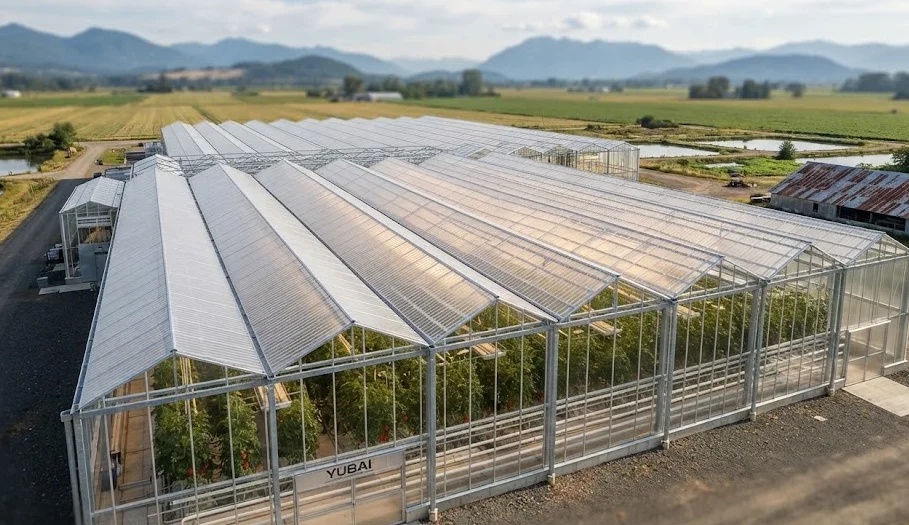
As a professional supplier, Yubai Technology provides polycarbonate roofing solutions designed for agricultural buildings and other demanding outdoor applications.
Why Traditional Agricultural Roofing Can Be a Problem
Roofing has a direct influence on the daily operation of an agricultural facility. A material that looks inexpensive at the purchasing stage may create higher costs later through repairs, replacement, heating, or additional lighting.
Glass is a common example. It allows plenty of natural light into a greenhouse, but it is relatively heavy and can break when exposed to strong impacts. Metal roofing provides excellent protection from rain and wind, but solid metal surfaces prevent natural light from reaching crops.
Ordinary plastic film also has limitations. Long-term exposure to sunlight, wind, temperature changes, and moisture can gradually reduce its performance.
For commercial farms operating throughout the year, these limitations can become expensive.
What Makes Corrugated Polycarbonate Roofing Different?
A major advantage of corrugated polycarbonate panels for agriculture is that the material can combine several functions in one roofing system.
Polycarbonate is naturally strong while remaining much lighter than glass. Its corrugated shape can further improve rigidity and help distribute loads across the supporting structure.
For agricultural buildings, this can mean:
- Better resistance to everyday impact
- Lower roof weight compared with glass
- Good natural light transmission
- Improved protection from rain and wind
- Easier handling during installation
- Longer service life with proper maintenance
These characteristics make durable polycarbonate roofing for commercial farms suitable for both new construction and renovation projects.
Better Light for Growing Environments
Natural light is an important part of greenhouse design. However, simply allowing as much sunlight as possible is not always the best solution.
Strong direct sunlight can create hot spots and excessive heat in certain areas of a growing space. Diffused polycarbonate panels can spread incoming light more evenly, helping reduce areas of intense direct sunlight.
Depending on the panel type, surface finish, and color, agricultural polycarbonate roofing can provide different levels of light transmission.
This gives farm designers more flexibility when selecting roofing materials for different crops and climate conditions.
For example, a greenhouse in a region with strong sunlight may benefit from a diffused panel, while a facility with lower natural light levels may require a higher-transmission option.
Thermal Performance Can Help Reduce Operating Costs
Temperature management is another important consideration for commercial agriculture.
During colder periods, a poorly insulated roof can allow indoor heat to escape quickly. During hot weather, excessive solar heat can make cooling more difficult.
Some multiwall corrugated polycarbonate roofing systems contain internal air spaces that help slow heat transfer. This can contribute to a more stable indoor environment and reduce the workload placed on heating and cooling equipment.
The actual energy savings will depend on the building design, local climate, ventilation, heating system, panel structure, and installation quality. However, better thermal performance can be an important part of a complete energy-saving strategy.
Strong Protection Against Weather
Agricultural facilities are often exposed to difficult outdoor conditions. Strong winds, hail, heavy rain, snow, and temperature changes can all put pressure on roofing materials.
Polycarbonate is well known for its impact resistance. Compared with conventional glass, it is much less likely to shatter when exposed to impact.
The corrugated structure also provides additional rigidity. When properly installed with a suitable supporting frame, the panels can help agricultural buildings withstand normal environmental loads.
This is particularly valuable for commercial farms where damage to a roof could affect crops, equipment, livestock, or stored products.
UV Protection for Long-Term Outdoor Use
Constant sunlight can gradually damage many plastic materials. Without suitable protection, some sheets may become yellow, brittle, or less attractive over time.
Quality UV-resistant polycarbonate roofing for greenhouses can include a protective UV layer that helps reduce the effects of long-term sunlight exposure.
This does not mean that the roof requires no maintenance. Correct installation, regular cleaning, proper fastening, and inspection remain important. However, UV protection can significantly improve the suitability of polycarbonate for long-term outdoor agricultural use.
Managing Condensation in Agricultural Buildings
Condensation is another issue that should not be overlooked.
When warm and humid indoor air meets a colder roof surface, water droplets can form. In a greenhouse or agricultural facility, uncontrolled dripping can create problems for plants, equipment, and workers.
Certain polycarbonate roofing solutions can be supplied with surface treatments designed to help manage condensation. Instead of allowing large droplets to fall directly from the roof, the moisture can spread across the surface and move toward the drainage area.
The effectiveness of this feature depends on the specific product and installation conditions, so agricultural projects should select the appropriate panel configuration for their environment.
Where Can Commercial Agricultural Polycarbonate Roofing Be Used?
The application range is not limited to greenhouses.
Commercial Greenhouses
Greenhouses are one of the most obvious applications. Polycarbonate roofing can provide natural daylight while offering stronger impact resistance than traditional glass.
Livestock and Poultry Buildings
Agricultural buildings for livestock and poultry can benefit from lightweight roofing that provides weather protection and, where required, controlled daylight.
Storage Buildings
Farm storage areas and agricultural warehouses can use translucent polycarbonate roofing to introduce natural light while maintaining protection from outdoor conditions.
Agricultural Processing Facilities
Processing and packing buildings may also use polycarbonate roofing in selected areas where daylighting, durability, and low maintenance are important.
Roof Renovation Projects
For older agricultural buildings using damaged glass, aging plastic sheets, or unsuitable roofing materials, polycarbonate can be considered as part of a modernization project.
Choosing the Right Polycarbonate Roofing for a Farm
Not every agricultural building has the same requirements. Before purchasing corrugated polycarbonate roofing for commercial farming, buyers should consider several factors.
Climate: Areas with heavy snow, strong winds, hail, or intense sunlight may require different panel structures and thicknesses.
Light requirements: Consider whether the building needs clear, diffused, or reduced light transmission.
Thermal requirements: Greenhouses operating through winter may place greater importance on insulation.
Panel structure: Corrugated and multiwall designs offer different performance characteristics.
UV protection: For long-term outdoor use, a suitable UV-resistant surface is important.
Installation method: Correct spacing, fasteners, overlap, ventilation, and expansion allowances can all influence service life.
A good roofing solution should therefore be selected according to the entire building rather than simply the lowest panel price.
Why Consider Yubai Technology?
For commercial agricultural projects, material quality is only one part of the purchasing decision. Buyers also need reliable product specifications, consistent manufacturing, suitable customization, and dependable communication.
Yubai Technology focuses on polycarbonate sheet solutions for applications where durability, light management, and weather resistance are important.
For agricultural customers, the right product can be selected according to factors such as panel structure, thickness, light transmission, UV protection, and project requirements.
This makes the product suitable for both new agricultural construction and existing facility upgrades.
Conclusion
The roof of a commercial agricultural facility affects much more than basic weather protection. It influences natural lighting, indoor temperature, maintenance requirements, and the overall durability of the building.
Corrugated polycarbonate roofing in commercial farming offers a practical combination of lightweight construction, impact resistance, light transmission, thermal performance, and UV protection. With the right design and installation, it can provide a reliable alternative to traditional agricultural roofing materials.
For farm owners, greenhouse developers, and agricultural contractors planning a new project or roof renovation, working with an experienced supplier such as Yubai Technology can help create a roofing system better suited to long-term commercial use.
Comments (0)