







Modern railway infrastructure relies on thousands of individual components working together to keep tracks stable and safe. From heavy-haul railways and high-speed passenger lines to industrial rail systems, fastening components must withstand continuous vibration, dynamic loads, weather exposure, and long-term mechanical stress.
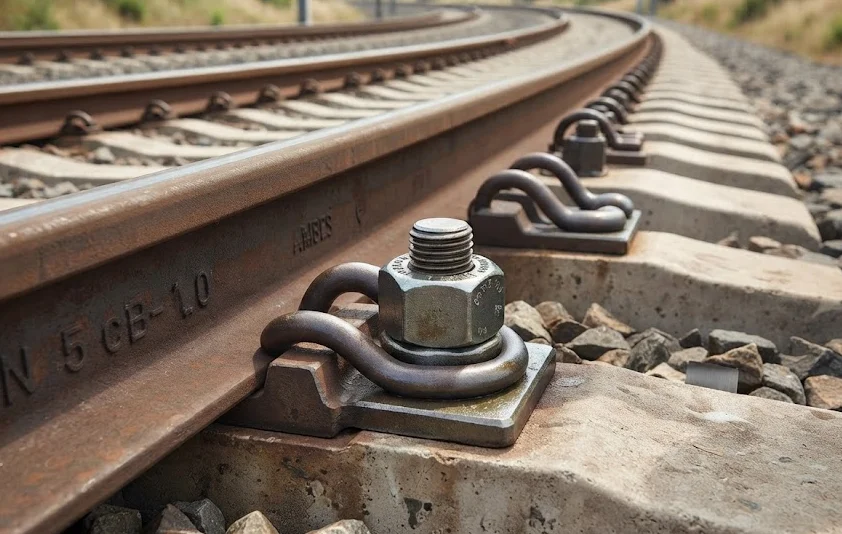
Among these components, Rail Nuts may appear relatively simple, but they play an important role in maintaining the connection between rail fastening components. Properly manufactured rail nuts help provide the required clamping force and ensure reliable engagement with the corresponding rail bolts.
What Role Do Rail Nuts Play in Railway Fastening?
A complete railway fastening system usually consists of several components, including rail bolts, nuts, washers, clips, baseplates, and related accessories. Each component contributes to keeping the rail correctly positioned and transferring loads to the supporting structure.
The rail nut provides the threaded connection needed to secure the fastening assembly. During train operation, the connection is exposed to repeated vibration and dynamic forces. If the nut does not fit the corresponding bolt correctly, the fastening system may experience installation difficulties or reduced connection stability.
For this reason, reliable rail fastening nuts should have consistent dimensions, accurate thread geometry, and appropriate mechanical properties for the intended application.
Material Selection and Mechanical Performance
The material used to manufacture railway nuts has a direct influence on their durability and mechanical performance.
Carbon steel and alloy steel are commonly considered for heavy-duty fastening applications because they can provide a suitable combination of strength, toughness, wear resistance, and manufacturing efficiency.
However, choosing a material based only on tensile strength is not enough. The nut must function as part of a complete fastening assembly. Buyers should also consider:
- Material compatibility with the rail bolt
- Hardness and mechanical properties
- Thread engagement
- Dimensional accuracy
- Environmental conditions
- Applicable railway specifications
By considering these factors together, railway contractors and procurement teams can select fastening components that are better suited to their actual operating conditions.
HuiBo Railway focuses on railway fastening products and pays close attention to material selection and manufacturing consistency for different project requirements.
Why Thread Accuracy Matters
Thread quality is one of the most important factors when evaluating rail nuts.
A nut with damaged threads, burrs, dimensional deviations, or an inconsistent thread profile may be difficult to install correctly. This can become particularly significant on large railway construction or maintenance projects involving thousands of fastening components.
Consistent thread manufacturing can help provide:
- Smooth installation
- Better bolt compatibility
- More predictable tightening
- Reduced assembly problems
- Improved connection consistency
For this reason, professional rail nuts manufacturers should have controlled production and inspection processes covering thread dimensions, nut geometry, tolerances, and finished-product quality.
Corrosion Resistance in Railway Applications
Railway fastening systems are often exposed to challenging outdoor conditions. Rain, humidity, condensation, road salt, industrial pollutants, and coastal environments can all accelerate corrosion.
Over time, corrosion may affect the nut surface and thread area, making installation and maintenance more difficult. It can also reduce the serviceability of fastening components if the selected protection is not suitable for the environment.
Surface treatment should therefore be considered during the purchasing process. The appropriate corrosion protection depends on the project's climate, operating environment, service requirements, and applicable technical standards.
For railway projects located in coastal, humid, or industrial areas, corrosion resistance should be evaluated as an important part of the overall fastening specification.
How to Select the Right Rail Nuts Supplier
Rail nuts should not be purchased independently of the rest of the fastening system. Before placing an order, buyers should review the complete technical requirements.
Important factors include:
Thread and Dimensions
Confirm the thread type, nominal dimensions, tolerances, and compatibility with the specified rail bolt.
Material Requirements
Check the required material grade, mechanical properties, and hardness according to the application and relevant standards.
Surface Treatment
Determine whether galvanized, coated, or other corrosion protection is required based on the operating environment.
System Compatibility
The nut should be properly matched with the rail bolt, washer, clip, baseplate, or other components used in the fastening assembly.
Quality Inspection
For large infrastructure projects, inspection records, dimensional checks, material documentation, and batch traceability can provide additional quality assurance.
Packaging and Delivery
Railway projects often require large quantities of standardized components. Appropriate packaging and reliable delivery are therefore important considerations for international buyers.
For OEM and project-specific orders, providing technical drawings or samples before mass production can also help the manufacturer confirm specifications and reduce potential compatibility issues.
What to Look for in a Rail Nuts Manufacturer
A capable rail nuts supplier should provide more than a standard product catalog. Manufacturing consistency, technical communication, quality inspection, and the ability to support customized requirements are all important when supplying railway infrastructure projects.
HuiBo Railway focuses on railway fastening products and related mechanical components. Its approach emphasizes dimensional consistency, thread accuracy, suitable materials, surface protection, and compatibility with complete railway fastening systems.
For railway contractors, distributors, maintenance companies, and OEM buyers, working directly with a specialized manufacturer can make technical coordination easier and help maintain consistent quality across different production batches.
Applications in Railway Infrastructure
Rail nuts and related fastening components can be used across a variety of railway infrastructure projects, depending on their design and applicable standards.
Typical applications may include:
- Heavy-haul railway systems
- High-speed railway infrastructure
- Conventional railway tracks
- Industrial railways
- Railway maintenance and replacement projects
- Track fastening assemblies
The specific nut design, material, dimensions, and surface treatment should always be selected according to the requirements of the individual railway system.
Why Small Fastening Components Deserve More Attention
Railway infrastructure is often evaluated from the perspective of major components such as rails, sleepers, bridges, and signaling systems. However, smaller mechanical components can also have an important role in maintaining the overall integrity of the track assembly.
A rail nut must maintain proper engagement with its mating bolt while operating under vibration, mechanical loading, and changing environmental conditions. Consistent manufacturing and appropriate material selection therefore contribute to the reliability of the complete fastening connection.
This is why procurement teams should evaluate rail nuts based on technical performance, quality consistency, and system compatibility rather than simply comparing unit prices.
Conclusion
Although rail nuts are relatively small components, their thread accuracy, material properties, dimensional consistency, and corrosion protection can have a meaningful impact on railway fastening performance.
When sourcing Rail Nuts for demanding infrastructure projects, buyers should consider the entire fastening system and carefully evaluate the required specifications, environmental conditions, quality controls, and supplier capabilities.
With experience in railway fastening products, HuiBo Railway provides rail nuts and related components for contractors, distributors, maintenance organizations, and OEM customers seeking dependable manufacturing and consistent product quality.
Comments (0)