









In modern imaging applications, a camera with mic is no longer just a convenience—it is an essential component for systems that rely on synchronized audio-visual capture. Industries ranging from machine vision and industrial inspection to education, conferencing, and public safety increasingly demand solutions capable of capturing sound and image simultaneously with high fidelity.
Among the leading innovators in this space, ELP has established a strong reputation for producing integrated camera systems that combine optical precision, stable signal processing, and high-performance microphones tailored for multi-environment deployment. As video technology evolves, the integration of audio becomes indispensable, enabling richer datasets, clearer communication, and more accurate human-machine interaction.
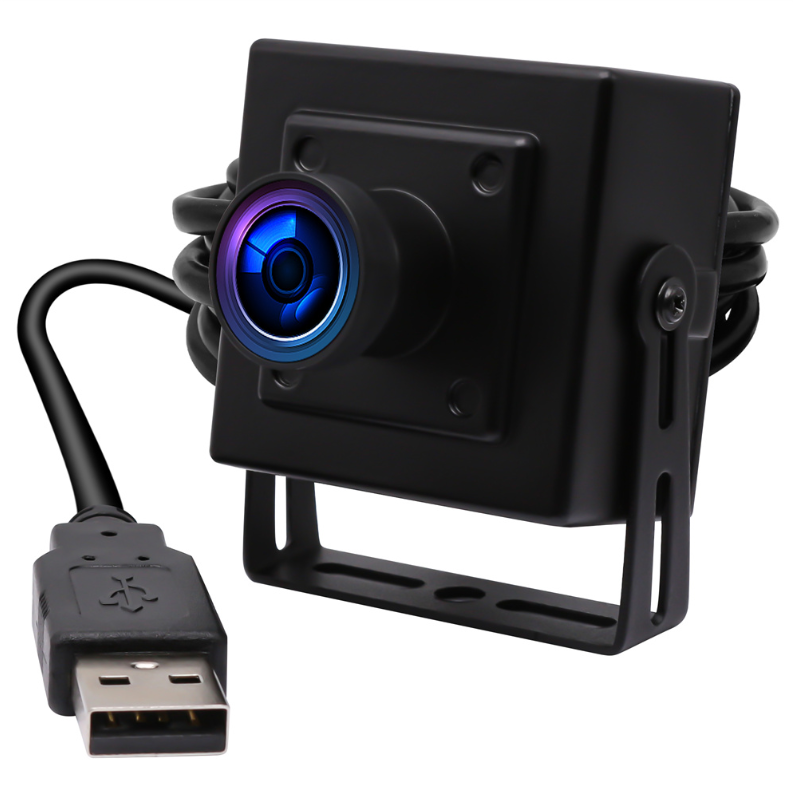
Why Cameras with Built-In Microphones Matter Today
The shift toward audio-visual synchrony is driven by several technological and practical needs:
1. Precise Time-Aligned Data
Applications like remote diagnostics, smart classrooms, behavioral analysis, and robotics rely on perfectly synchronized sound and video. Disjointed streams lead to analytical errors and communication inefficiencies.
ELP’s integrated audio acquisition ensures minimal latency, enabling real-time voice-image alignment required in AI recognition, conferencing, and interactive IoT systems.
2. Enhanced Contextual Awareness
Image alone cannot fully convey a situation:
Machine vision inspections use sound to detect abnormal vibrations.
Remote security monitoring identifies events not visible on camera.
Robotics uses voice cues to initiate tasks.
A camera with mic transforms a passive imaging module into a contextual sensor.
3. Reduced Installation Complexity
External microphones require:
Additional wiring
Independent power sources
Higher maintenance
Greater risk of signal interference
A camera with an integrated mic simplifies deployment, reduces cost, and ensures optimal audio pickup positioning.
Technical Breakdown: What Defines a High-Quality Camera with Mic
Not all integrated devices are created equal. Professional environments require more than just a basic microphone. Below are the critical technical pillars that ELP engineers into its solutions:
1. High-Sensitivity Noise-Controlled Microphone
A superior mic must include:
-
Wide dynamic range
-
Intelligent noise suppression
-
Accurate voice pickup even at varying distances
-
Low distortion at high sound pressure levels
ELP designs its microphones with optimized acoustic chambers to enhance clarity and reduce environmental interference.
2. High-Resolution CMOS Imaging
A camera with mic achieves full potential only when paired with advanced imaging:
-
1080p to 4K resolution options
-
Low-light optimization
-
Wide dynamic range (WDR)
-
High frame rates for smooth, detailed motion
These features ensure that audio matches corresponding visual detail with precision.
3. Stable USB or Network Output
ELP’s series commonly feature USB2.0/USB3.0/USB-C outputs and optional network interfaces. Stable bandwidth ensures:
Zero-lag transmission
Lossless audio stream
Compatibility with laptops, industrial PCs, and embedded systems
4. Plug-and-Play Architecture
Integrated cameras with mic simplify deployment in:
Conference systems
Teaching platforms
Medical imaging terminals
Robotics and automation equipment
ELP products eliminate driver complexity and support major OS ecosystems.
Applications Across Multiple Industries
1. Industrial Automation & Robotics
Robots require environmental sound cues such as collision noise, mechanical vibration, or voice commands. A camera with mic provides multi-dimensional sensory feedback for intelligent robots.
2. Smart Classrooms & Remote Training
Clear voice capture combined with live video enhances interaction, ensuring that remote students receive real-time, accurate audio-visual content.
3. Live Streaming & Content Creation
Creators benefit from:
Portable setups
Minimal external equipment
Clear voice capture without separate audio interfaces
ELP’s USB cameras with mic provide stable streaming quality suitable for YouTube, Twitch, and professional webinars.
4. Medical & Laboratory Environments
Research labs often record procedural audio alongside video:
Instrument operation sounds
Verbal notes
Environmental conditions
These audio-visual datasets improve documentation accuracy and training.
5. Surveillance and Public Safety
Audio improves event analysis, enabling:
Gunshot detection
Emergency voices
Intrusion signals
With both inputs aligned, incident evaluation becomes more reliable.
Why Choose an ELP Camera with Mic
ELP distinguishes itself through engineering depth and practical design:
Precision Audio Engineering
Microphones are tuned for clarity, capturing natural voice profiles without artificial boosting or distortion.
Industrial-Grade Reliability
Stable performance under:
-
Long-term 24/7 operation
-
High/low temperatures
-
Fluctuating lighting conditions
-
Modular Flexibility
ELP offers multiple lens choices, field-of-view options, and mounting configurations for different industries.
Consistent Firmware Optimization
Real-time updates ensure:
-
Improved audio-video synchronization
-
Better noise suppression
-
Enhanced color calibration
Their integrated architecture delivers professional-grade AV performance in a compact device.
Conclusion: Audio-Visual Integration Is the Future of Intelligent Imaging
As systems move toward richer data and immersive interactions, the demand for cameras with integrated microphones continues to rise. With its industry expertise and commitment to engineering precision, ELP provides stable, high-definition, multi-scenario imaging solutions that meet the needs of both traditional and emerging industries.
Whether used in automation, education, robotics, or security, a camera with mic is no longer an accessory—it is an essential foundation for modern digital communication and intelligent sensing.
Comments (0)